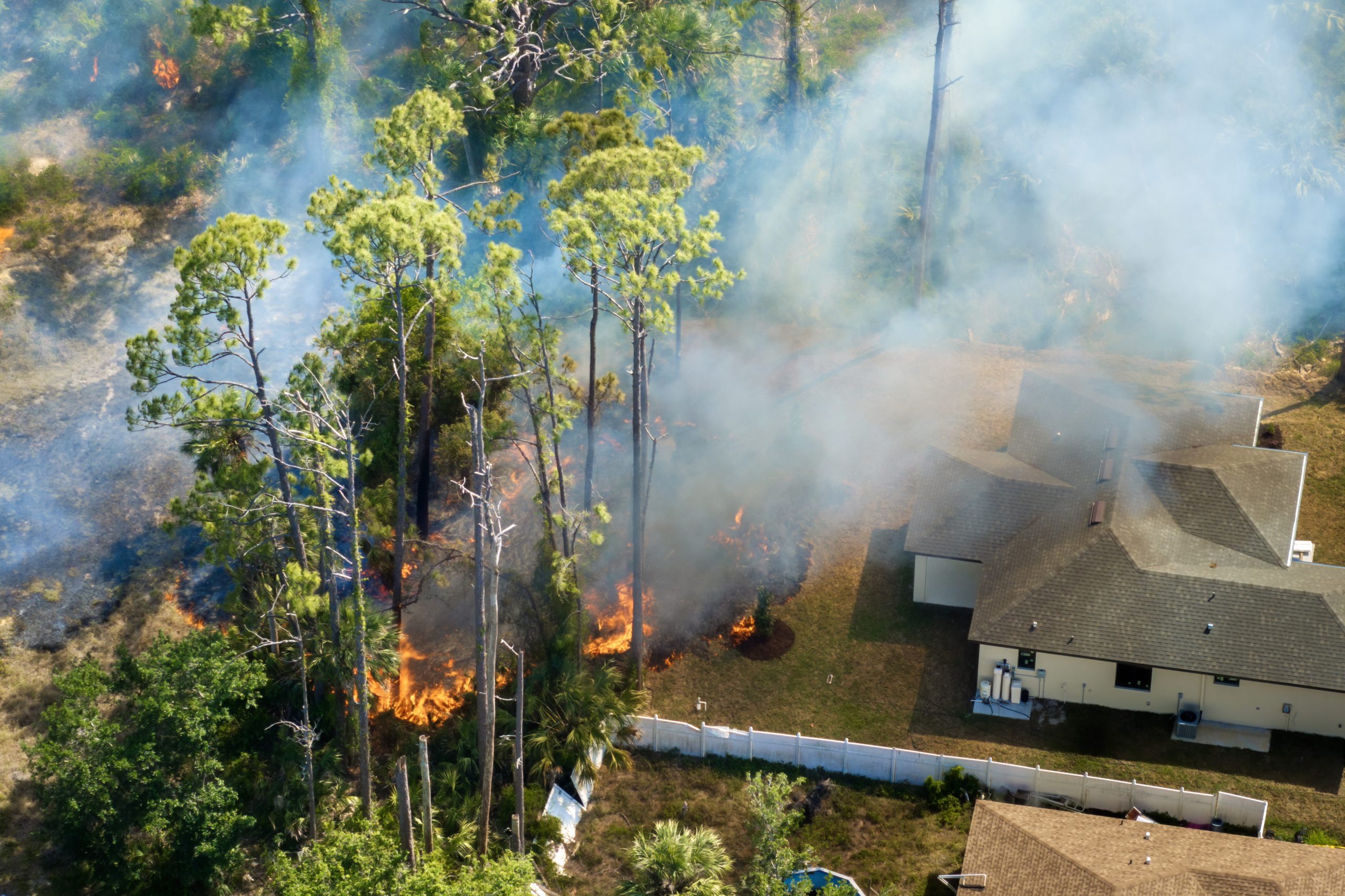



A home structure fire is reported every 96 seconds in the United States. Whether it’s a kitchen mishap, an electrical fault, or a wildfire spreading through a neighborhood, fire is one of the most devastating things that can happen to a homeowner.
The good news is that standard homeowners’ insurance typically covers fire damage. But there are important details every homeowner should understand before a claim ever needs to be filed.
What Does Home Insurance Cover in a Fire?
Most standard homeowners’ policies cover fire damage across four key areas:
Dwelling Coverage — This covers the structure of your home itself: walls, roof, flooring, built-in appliances, and attached structures like a garage. If a kitchen fire damages your cabinets and ceiling, dwelling coverage pays for the repairs or rebuilding costs.
Other Structures — Also called detached structures coverage, this pays for damage to structures on your property that aren’t attached to your home: fences, sheds, and detached garages.
Personal Property — Your belongings inside the home are covered too. Furniture, clothing, appliances, and electronics damaged or destroyed in a fire can be repaired or replaced up to your policy limits.
Loss of Use — If your home becomes uninhabitable while repairs are underway, loss of use coverage pays for your temporary housing, meals, and other living expenses. This is one of the most overlooked but most valuable parts of a home policy.
Replacement Cost vs. Actual Cash Value
This is one of the most important things to understand about your policy.
Actual Cash Value (ACV) pays you the depreciated value of damaged items, what they’re worth today, not what it costs to replace them. A five-year-old sofa that cost $1,000 may only be worth $400 today.
Replacement Cost Value (RCV) pays what it actually costs to buy a comparable new item at today’s prices, no depreciation deducted.
RCV coverage typically costs more in premiums, but it provides far better protection after a major loss. Make sure you know which one your policy uses.
When Fire Damage May NOT Be Covered
Not every fire claim is automatically approved. Here are the most common situations where coverage can be denied:
Arson — If the fire is ruled intentional or fraudulent, the insurer will deny the claim.
Negligence or Poor Maintenance — If the fire resulted from something the homeowner could have reasonably prevented, like a chimney that hasn’t been cleaned in years, coverage may be limited or denied.
Vacant Property — Most policies exclude coverage for homes left unoccupied for 30 to 60 days or more. If the home is empty when damage occurs, you may not be covered.
Acts of War — Standard policies do not cover damage caused by war or nuclear events.
Are Wildfires Covered?
In most standard policies, yes, wildfire damage is covered under dwelling and personal property coverage. However, if you live in a designated high fire risk area, some insurers may limit, exclude, or cancel wildfire coverage altogether. California homeowners in high-risk zones have seen this firsthand as major carriers pull back from the market.
If you’ve been dropped or denied, the California FAIR Plan exists as a last-resort option for basic fire coverage.
Protect Your Home in Lancaster, CA
At The Edgar Ortiz Agency, we offer homeowners’ insurance coverage built for the realities of California living, including protection for those in high fire risk areas. As a local insurance agency in Lancaster, we provide reliable coverage that ensures your home is protected for what it would actually cost to rebuild it, not just what it’s worth on paper.
Call us at 661-270-3200 or get your free home insurance quote today.